
Table of Contents
- Signs of a Water Leak Behind a Wall
- What You'll Need Before You Start
- Step 1: Check Your Water Meter for Ongoing Use
- Step 2: Listen for Dripping and Hissing Sounds
- Step 3: Inspect Plumbing Fixtures and Visible Pipes
- Water Leak Detection Tools You Can Use at Home
- How Plumbers Detect Hidden Water Leaks
- Distinguishing Plumbing Leaks from Rainwater Intrusion
- Frequently Asked Questions
Last Updated: October 14, 2026
Signs of a Water Leak Behind a Wall
Hidden water leaks behind walls are among the most destructive plumbing problems homeowners face. Unlike a visible drip under the sink, they work silently for weeks or months.
The good news: your home gives you clues. You just need to know what to look for.
Water stains and discoloration
The most obvious sign of hidden water leaks behind walls is water stains or discoloration on walls and ceilings, yellow, brown, or rust-colored patches that grow larger over time.
Water travels, so it doesn't stay where the leak starts. A pipe rupture behind your kitchen wall might show up on the ceiling below or on drywall in an adjacent room, the visible damage isn't always beside the leak source.
Check these areas first:
- Ceilings under bathrooms or kitchens
- Walls near plumbing fixtures
- Basement walls and corners
Musty odors and mold growth
A persistent musty smell in one room is a red flag: moisture is trapped inside your walls, and mold is likely growing in the cavity behind the drywall. Mold thrives in damp, dark spaces and spreads fast, you might not see it yet, but you'll smell it.
If you notice musty odors:
- Don't ignore them hoping they go away
- Check for visible mold on baseboards or in corners
- Look for black or greenish spots on drywall edges
Unexplained dampness and wet areas
Run your hand along your walls. Any section that feels damp or cold with no obvious cause, especially localized dampness that keeps returning, almost always means water is moving through your walls.
Higher water bills and meter readings
Your water bill jumped 20 percent for no reason, same habits, same family size. That's a strong indicator of a hidden leak.
A single dripping pipe can waste hundreds of gallons per month (the EPA).
Check your water meter to confirm. If the meter keeps running even when all fixtures in your home are off, water is leaking somewhere in your system.
What You'll Need Before You Start
Finding a hidden water leak requires basic tools and patience, you don't need expensive equipment for the first steps. Gather a flashlight or headlamp, a moisture meter (optional), a stethoscope or acoustic listening device (optional), a pen and notebook for meter readings, and access to your water meter.
Step 1: Check Your Water Meter for Ongoing Use
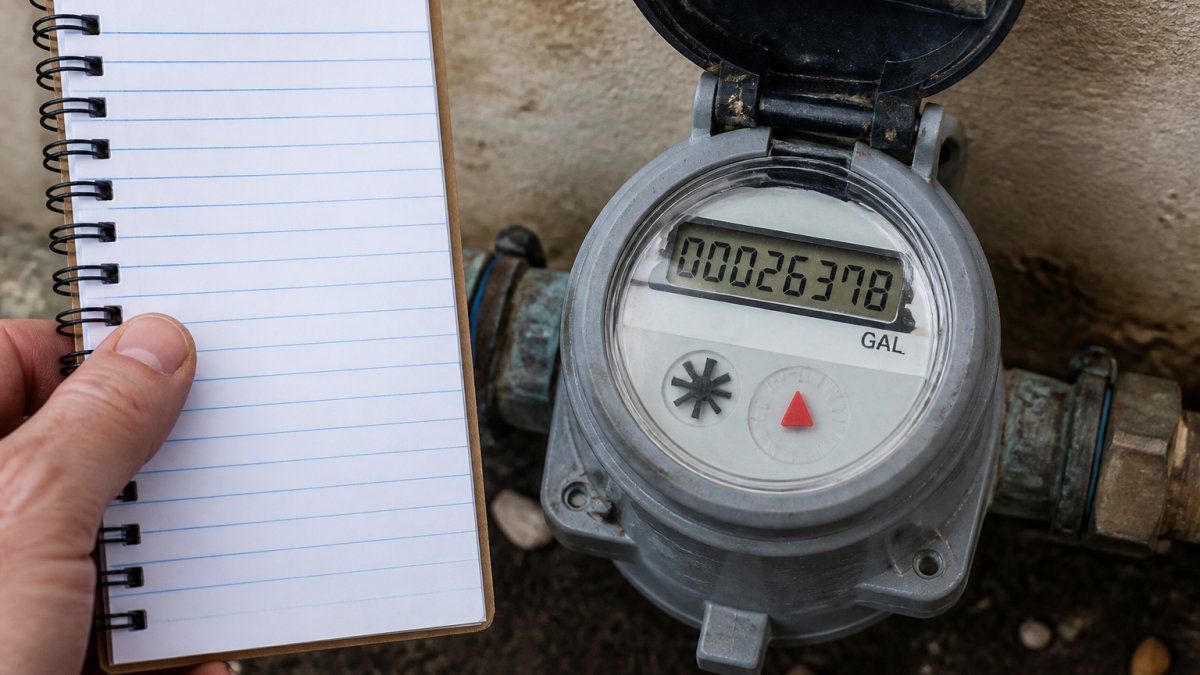
Your water meter is the most useful diagnostic tool you own, and it's free. It answers one question definitively: is water moving through your supply system right now, while nothing in the house is using water? If yes, you have an active supply-side leak.
Before you start: isolate every water-using appliance
A meter test only works if nothing in the house can draw water during the test window, more than turning off faucets.
- Shut off the ice maker supply valve (usually behind or under the refrigerator)
- Shut off the humidifier feed if your furnace has one
- Shut off outdoor hose bibs at the interior valve, not just the spigot
Skip this step and a running toilet or cycling ice maker will make a healthy system look like it's leaking.
Read the meter correctly
Residential meters in the U.S. come in two common styles, read differently.
Straight-reading (digital) meters show a number like 00432.15.
Round-reading meters have several small dials plus one large dial (usually one unit per full rotation).
Most meters also have a low-flow indicator, a small triangle, gear, or red dial that spins whenever water moves.
Run the test
- Record the exact meter reading, including the low-flow indicator position
- Wait at least 30 minutes, an hour is better if you suspect a slow leak
- Do not use any water during the wait, including flushing a toilet
- Record the meter reading again
If the reading changed: water moved through the meter, an active leak on the pressurized side of your plumbing (supply line, fitting, or fixture feed).
If the reading did not change: no active supply-side leak right now. The leak is intermittent, on the drain side (which the meter cannot see), or from outside the plumbing system.
What the meter cannot tell you
A meter test confirms that water is moving, not where. It also cannot detect:
- Drain-line leaks, water leaving through a drain pipe never passes through the meter
- Intermittent supply leaks, a pinhole that only weeps under pressure spikes won't show up in a 30-minute window
- Rainwater intrusion, roof, window, and foundation leaks are invisible to the meter
If the meter test is negative but you still see stains, smell must, or feel dampness, move to the next steps. A negative test doesn't mean no leak, it means the leak isn't currently drawing from the supply system.
The overnight test for slow leaks
For a slow leak a 30-minute window might miss, run the test overnight. Shut off every appliance as above, record the reading before bed, and again first thing in the morning before anyone uses water. An overnight change of even a fraction of a unit signals a continuous slow leak, the kind that quietly rots framing and feeds mold.
Step 2: Listen for Dripping and Hissing Sounds
Your ears are sensitive instruments, and leaking water makes noise.
Where to listen:
- Behind walls with visible water stains
- Around pipes you can access in basements or crawlspaces
- Under sinks and around toilet bases
A stethoscope amplifies these sounds, press the diaphragm against the wall and leaks become much louder.
Step 3: Inspect Plumbing Fixtures and Visible Pipes
Before assuming the leak is hidden behind a wall, check the obvious sources:
- Under sinks, water pooling, wet wood, or corrosion on pipes
- Around toilets, the base and the connection where water enters
- Water heater, rust stains, puddles, or corrosion
- Washing machine connections, these fail frequently
- Accessible pipes in basements or crawlspaces, wet spots, mineral deposits, or corrosion
Many "hidden" leaks are visible if you look carefully, a pinhole in a copper pipe is small, but the water damage around it is obvious. Run your hand along visible pipes; feel for water, even a thin film, and look for white mineral buildup (calcium deposits from leaking water).
Water Leak Detection Tools You Can Use at Home
Professional plumbers use specialized equipment, and some of it is affordable for homeowners.
Moisture meters and thermal cameras
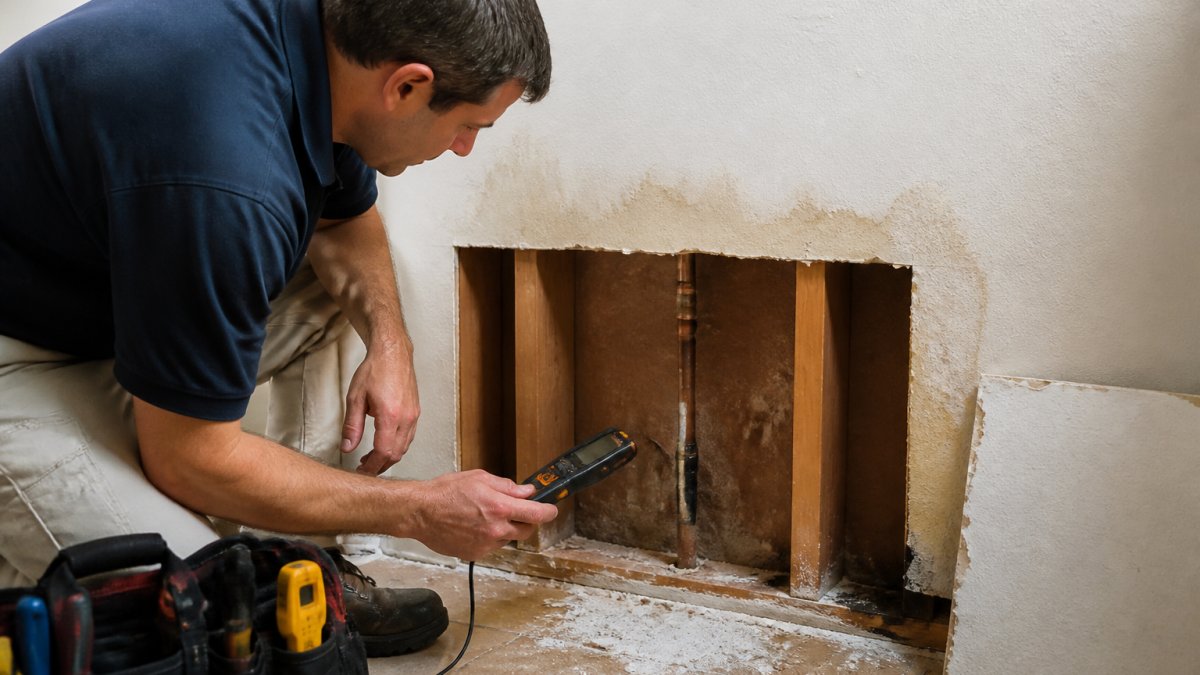
A moisture meter measures water content in drywall and wood. Press the probes into suspect areas; high readings indicate water is present.
The limitation: both tools show moisture exists but not the exact leak source. They narrow the search area but don't replace a professional inspection.
Acoustic leak detection devices
An acoustic listening device amplifies the sound of flowing water, essentially a high-tech stethoscope for leak detection. These devices pick up vibrations from water moving through pipes and work best on metal (copper, steel) because metal conducts sound well; plastic pipes are harder to detect this way.
How Plumbers Detect Hidden Water Leaks
When DIY methods don't work, professional leak detection is the next step, plumbers use equipment homeowners don't have.
Professional-grade detection equipment
Licensed plumbers use tools designed for finding hidden leaks:
- Electronic listening devices, More sensitive than consumer models; they detect leaks in pipes buried in walls or underground
- Thermal imaging cameras, Professional versions show precise temperature variations that indicate water movement
- Moisture meters, Industrial-grade versions give more accurate readings than consumer models
These tools cost thousands, which is why professionals have them and homeowners typically don't.
Non-destructive inspection methods
The key advantage of professional leak detection is non-destructive inspection. A plumber can find your leak without tearing open walls.
A good plumber will:
- Use acoustic and thermal equipment to narrow down the leak location
- Confirm the leak with moisture readings
- Identify the likely source (plumbing pipe, supply line, or rainwater intrusion)
- Recommend repair options before any walls are opened
This saves thousands in wall damage and reconstruction costs.
Distinguishing Plumbing Leaks from Rainwater Intrusion
Not every hidden water leak comes from plumbing. Rainwater intrusion through the roof, windows, exterior walls, or foundation is just as common, and the repair path is completely different. Misdiagnosing a roof leak as a pipe leak (or the reverse) means paying a plumber to find nothing, or sealing a window while a supply line keeps weeping inside the wall.
The weather-correlation test
This is the single most useful diagnostic step.
- Log the symptom. Every time you see fresh staining, dampness, or a musty smell, write down the date, the room, and the weather for the previous 24-72 hours.
- Wait for a dry stretch. After at least 5-7 consecutive dry days, inspect the same spot again. Photograph it.
- Wait for a heavy rain. After a storm that drops meaningful rain, inspect and photograph the same spot again.
- Compare. If the stain grows or the dampness returns only after rain, you have rainwater intrusion. If it grows steadily regardless of weather, you have a plumbing leak.
A plumbing supply leak runs 24/7, 365 days a year; rainwater intrusion is episodic. That difference is the tell.
Source mapping: where rainwater actually enters
If the weather test points to rainwater, narrow the entry point. Rainwater follows gravity and building geometry, so the entry is often far from the visible stain.
Roof and attic
- Missing, cracked, or lifted shingles
- Failed flashing around chimneys, vents, and skylights
- Clogged or overflowing gutters that back water under the roof edge
Windows and doors
- Failed caulk or weatherstripping
- Clogged weep holes in window frames (blocked, they push water inward)
- Improperly flashed window openings, especially on the windward side
Exterior walls
- Cracks in stucco, brick mortar, or siding
- Failed sealant around penetrations (hose bibs, dryer vents, utility entries)
- Missing or deteriorated house wrap behind siding
Foundation and grading
- Soil sloping toward the house instead of away
- Downspouts discharging within a few feet of the foundation
- Cracks in the foundation wall or slab
Signs it's a plumbing leak:
- Water appears year-round, regardless of weather
- The leak is concentrated in one area and grows steadily
- Stains are near plumbing fixtures, supply lines, or drain stacks
Signs it's rainwater intrusion:
- Water appears or worsens during or after heavy rain
- Stains follow a pattern along ceilings, corners, or exterior walls
- The leak is near windows, doors, the roof line, or the foundation
When the signs overlap
Overlap is common and is where most homeowners get stuck. Two scenarios account for most of it:
Scenario 1: A plumbing leak that only shows up when it rains. Usually a drain or vent stack is leaking and the rain is coincidental, or the leak is in a wall that also takes on rainwater. Run the meter test during a dry week: if the meter moves, it's plumbing; if not, treat it as rainwater first.
Scenario 2: A rainwater leak that looks like a plumbing leak. Water entering at the roof can travel down inside a wall and emerge near a bathroom or kitchen, mimicking a fixture leak. A negative meter test with a rain-correlated stain points to the roof or exterior, not the pipes.
Why the distinction matters for repair
A plumbing leak is fixed by a plumber: repairing or replacing the failed pipe, fitting, or fixture. A rainwater leak is fixed by a roofer, window contractor, or waterproofing specialist: sealing the entry point and correcting drainage. Calling the wrong trade wastes money and leaves the leak running.
Frequently Asked Questions
How do you find a leak behind a wall without cutting into it?
Start with non-destructive methods: check your water meter for continuous use when no fixtures are running, listen for dripping or hissing sounds near suspected areas, and inspect visible plumbing fixtures. A moisture meter can detect dampness through drywall without opening it. Thermal imaging cameras show temperature differences that indicate water travel. If these steps don't pinpoint the leak, a professional plumber uses acoustic leak detection equipment to locate the exact source before any wall is opened.
What tools do plumbers use to find hidden water leaks?
Professional plumbers use thermal imaging cameras to detect temperature variations along walls and pipes, acoustic leak detection devices that amplify sounds of water escaping under pressure, and specialized moisture meters to identify water behind walls. These water leak detection tools pinpoint leak sources with precision, minimizing unnecessary wall damage and reducing diagnostic time.
How can you tell if a wall leak is from a plumbing pipe or rainwater?
Plumbing leaks typically appear near interior walls, bathrooms, kitchens, or under sinks, and the water is often clean. Rainwater intrusion occurs on exterior walls, usually after heavy rain, and may contain dirt or debris. Check the pattern: rainwater flows downward and spreads outward, while plumbing leaks often concentrate in one spot. If the leak appears only during or immediately after rain, it's likely rainwater intrusion. Plumbing leaks persist regardless of weather. A professional plumber can confirm the source using visual inspection and moisture mapping.
How much does it cost to fix a leak behind a shower wall?
Repair costs depend on the leak's location, the extent of water damage, and whether the wall must be opened. Simple fixture leaks cost less than structural repairs requiring drywall replacement and mold remediation. Pricing also varies based on your location and local labor rates. Contact Rustler Plumbing for an upfront quote, we provide transparent pricing with no hidden fees, and our licensed plumbers assess the damage before giving you an exact cost.